If you have ever wondered what it feels like to live inside a place that carries centuries of history in every block, Viejo San Juan offers a rare answer. This is not a typical city neighborhood built around wide roads, large lots, and easy parking. It is a compact historic district where daily life unfolds among cobblestone streets, fortified walls, plazas, and architecture that has been shaped and protected over generations. If you are considering a move, a second home, or an investment with character, understanding how history, design, and routine come together here can help you decide whether this setting fits your lifestyle. Let’s dive in.
What makes Viejo San Juan distinct
Viejo San Juan is the historic core of San Juan on San Juan Islet, set between the Atlantic Ocean, San Juan Bay, and the San Antonio Channel. It is connected to the mainland by four bridges, but once you are inside the district, the experience feels much more pedestrian than car-oriented.
The area was settled beginning in 1519, and fortification construction began in 1539. Over time, the city developed on an orthogonal grid with public plazas and important civic buildings near the harbor, including the cathedral, La Fortaleza, and Casa Blanca. That early structure still shapes how the neighborhood feels today.
This layered history is one reason Viejo San Juan stands apart in Puerto Rico’s residential landscape. It is both a living neighborhood and a protected heritage setting, with recognition tied to the San Juan National Historic Site and La Fortaleza as a UNESCO World Heritage Site since 1983.
History is part of daily life
In many places, history is something you visit on the weekend. In Viejo San Juan, history is part of your everyday surroundings. The walls, forts, street layout, and public spaces are not separate from residential life. They are the backdrop to morning walks, errands, coffee stops, and evening strolls.
The district reflects more than 500 years of European history, and that depth is visible in a way that feels unusually intact. Instead of one preserved landmark or one restored street, the area reads as a complete urban ensemble.
That scale matters if you are thinking about living here. You are not just choosing a home. You are choosing a setting where the built environment has a strong identity, and where preservation shapes the rhythm of ownership as much as the charm of the neighborhood.
Architecture in Viejo San Juan
The architecture in Viejo San Juan is dense, layered, and closely tied to the district’s historic character. The streets are narrow, and the residential buildings are tightly packed, with many structures dating to before 1898.
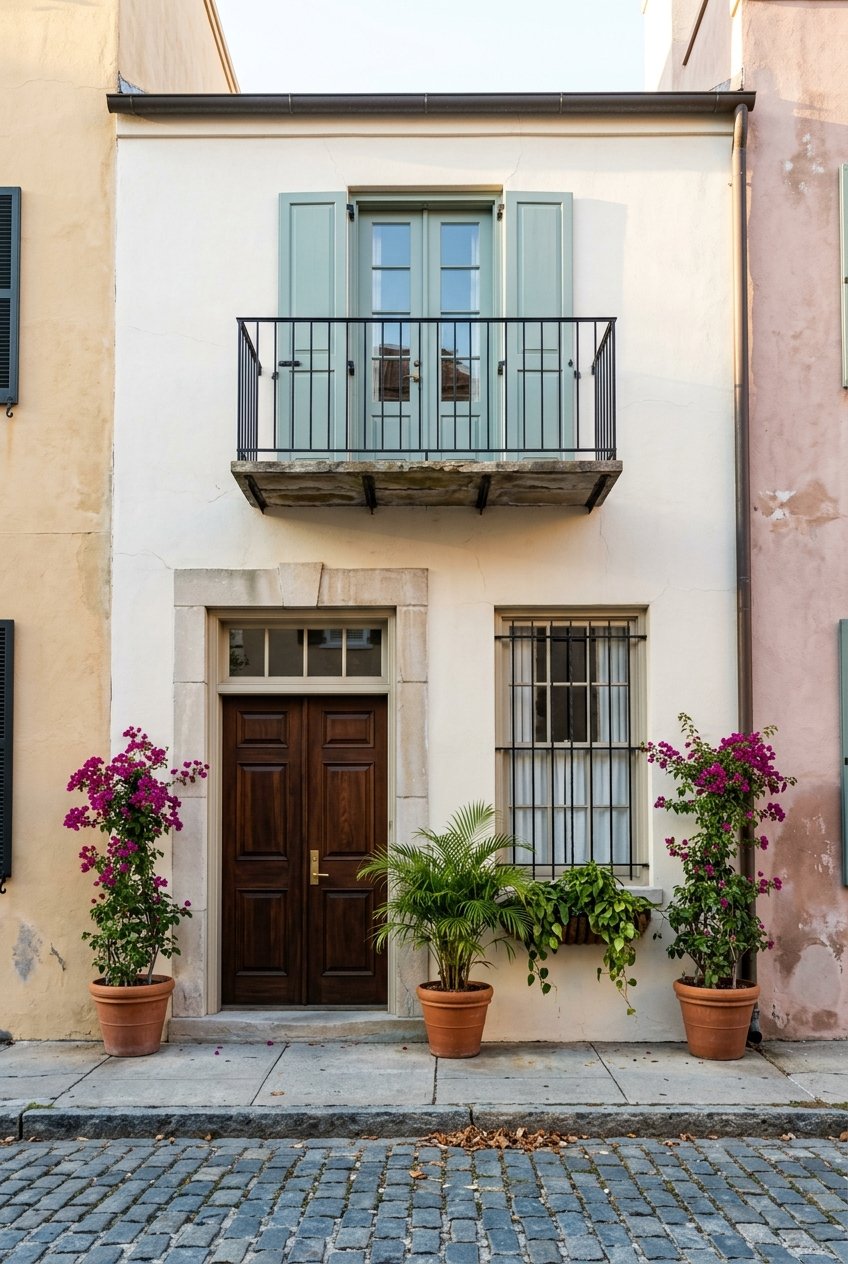
Historic records describe traditional construction methods such as tapiería and mampostería, often finished with stucco exteriors. That gives the neighborhood its textured, time-worn appearance, where walls, balconies, shutters, and rooflines all contribute to a cohesive streetscape.
The district includes hundreds of historic resources. According to the Puerto Rico State Historic Preservation Office, the historic zone includes 917 resources, with 798 considered contributing resources. For you as a buyer or owner, that helps explain why the area feels so visually consistent and why even small details matter.
Features you will notice most
Many of the details that define Viejo San Juan are not grand gestures. They are the everyday architectural elements that repeat from block to block and give the district its identity.
You will often see features such as:
- Stucco façades
- Balconies and railings
- Shutters and traditional windows
- Interior courtyards
- Roof terraces
- Historic doors and entryways
- Eaves, lanterns, and decorative details
These details are a big part of the appeal for design-conscious buyers. They can also shape what ownership looks like in practice.
What preservation means for homeowners
Owning property in Viejo San Juan is different from owning in a newer neighborhood. Preservation here is formal and institutional, not informal or optional.
The Puerto Rico State Historic Preservation Office works to protect the island’s architectural and archaeological heritage. Listed properties are evaluated under preservation standards, and exterior changes may affect the district’s historic character.
For homeowners, that can mean that items many people would view as simple updates in another area may require closer consideration here. Published preservation guidance for San Juan has covered elements such as façades, stairs, interior courtyards, pavements, roof terraces, doors, windows, balconies, shutters, paint, cisterns, fountains, railings, lanterns, pipes, and signs.
Why this matters before you buy
If you are considering a residence in Viejo San Juan, it helps to think beyond layout and location. You should also consider how much responsibility comes with maintaining a historic property.
A few practical questions to ask include:
- How much restoration or upkeep does the property need?
- Which visible features contribute to the building’s historic character?
- Are you looking for a move-in-ready residence or a property with renovation potential?
- Do your design goals fit within preservation expectations?
For the right buyer, these factors are part of the appeal. A historic home can offer lasting character and architectural depth that newer inventory may not match.
Daily life is shaped by walkability
One of the biggest lifestyle differences in Viejo San Juan is how much life happens on foot. This is a district built around short walks, frequent stops, and a strong relationship between home, street, plaza, and waterfront.
Getting around on foot is generally straightforward, and rideshare or taxi service can help with longer trips. There is also a ferry link from Cataño to Old San Juan, which adds another transportation option tied to the bay.
This walkable structure gives the neighborhood a very different feel from more car-dependent parts of the metro area. Your routine may include walking to coffee, crossing a plaza on the way to an errand, or ending the day with a waterfront promenade instead of a drive.
The rhythm of public spaces
Viejo San Juan’s social life is closely tied to its public spaces. Plazas, promenades, cafés, and galleries create places where daily activity naturally gathers.
Plaza de Armas remains one of the clearest examples. It is described as a colonial-era square where people sit with coffee and pastries, which speaks to the neighborhood’s slower, more social pace.
Paseo de la Princesa and Paseo del Morro are also important parts of the district’s daily rhythm. These walking routes along the walls and bay give residents access to open air, views, and movement without leaving the historic core.
The practical side of living here
Viejo San Juan is beautiful, but it is not effortless in the way a modern planned community can be. The neighborhood’s charm comes with practical realities that shape day-to-day comfort.
The historic site includes steep, slippery, and uneven surfaces in places, and sturdy footwear is recommended. Heat and sun exposure also matter, especially if your routine involves regular walking.
That means your experience of the neighborhood may depend on how comfortable you are with stairs, uneven paving, and limited car convenience. For many residents, those tradeoffs are worth it because the setting is so distinctive. Still, it is smart to view the area clearly and not just romantically.
Who tends to love Viejo San Juan living
Viejo San Juan often appeals to buyers who value atmosphere, architecture, and location more than suburban ease. If you are drawn to historic design, walkability, and a neighborhood with a strong sense of place, this area can feel deeply rewarding.
It may also appeal to second-home buyers, relocators, and investors looking for something that stands out from standard inventory. The district offers a form of ownership tied as much to cultural and architectural context as to square footage.
At the same time, it is best suited to people who appreciate that preservation is part of the package. Living here is less about convenience-first real estate and more about choosing a home within a protected urban landscape.
What to weigh before making a move
Before you buy in Viejo San Juan, it helps to balance the emotional appeal with the realities of ownership. The right match usually comes from understanding both.
Here are a few points to keep in mind:
- Lifestyle: Expect a walkable, compact environment rather than a car-centered one.
- Architecture: Historic details and older construction are part of the value.
- Upkeep: Maintenance and restoration may require more planning than in newer areas.
- Setting: Public plazas, waterfront promenades, and dense streets shape daily life.
- Character: The neighborhood offers a rare sense of continuity and place.
For many buyers, that combination is exactly the point. Viejo San Juan is not interchangeable with other neighborhoods in San Juan. It offers a very specific way of living, rooted in history, architecture, and urban texture.
If you are exploring homes in Puerto Rico and want guidance that matches the depth and nuance of a place like Viejo San Juan, Corcoran Puerto Rico - Main Site can help you evaluate the lifestyle, property fit, and market context with clarity.
FAQs
What is daily life like in Viejo San Juan for full-time residents?
- Daily life in Viejo San Juan is highly walkable and centered around plazas, cafés, galleries, and waterfront promenades, with routines shaped more by foot traffic and public spaces than by driving.
What kind of architecture can you expect in Viejo San Juan homes?
- Homes and residential buildings in Viejo San Juan are part of a dense historic fabric that often includes stucco exteriors, balconies, shutters, interior courtyards, roof terraces, and traditional masonry construction.
What should buyers know about preserving a property in Viejo San Juan?
- Buyers should know that preservation standards can affect exterior features and visible architectural elements, so renovation and maintenance often require more planning than they would in a newer neighborhood.
Is Viejo San Juan a car-dependent neighborhood?
- No, Viejo San Juan functions more as a compact pedestrian district, where many daily activities can be done on foot, with rideshare, taxi service, and the Cataño ferry adding mobility options.
Why does Viejo San Juan feel different from other San Juan neighborhoods?
- Viejo San Juan feels different because it combines a 16th-century street layout, fortified historic landscape, preserved architecture, and active residential and commercial use within a compact district.
Is Viejo San Juan a good fit for buyers seeking historic character?
- Yes, Viejo San Juan can be a strong fit for buyers who value architectural character, walkability, and a deeply rooted sense of place, and who understand the responsibilities that come with owning in a protected historic district.