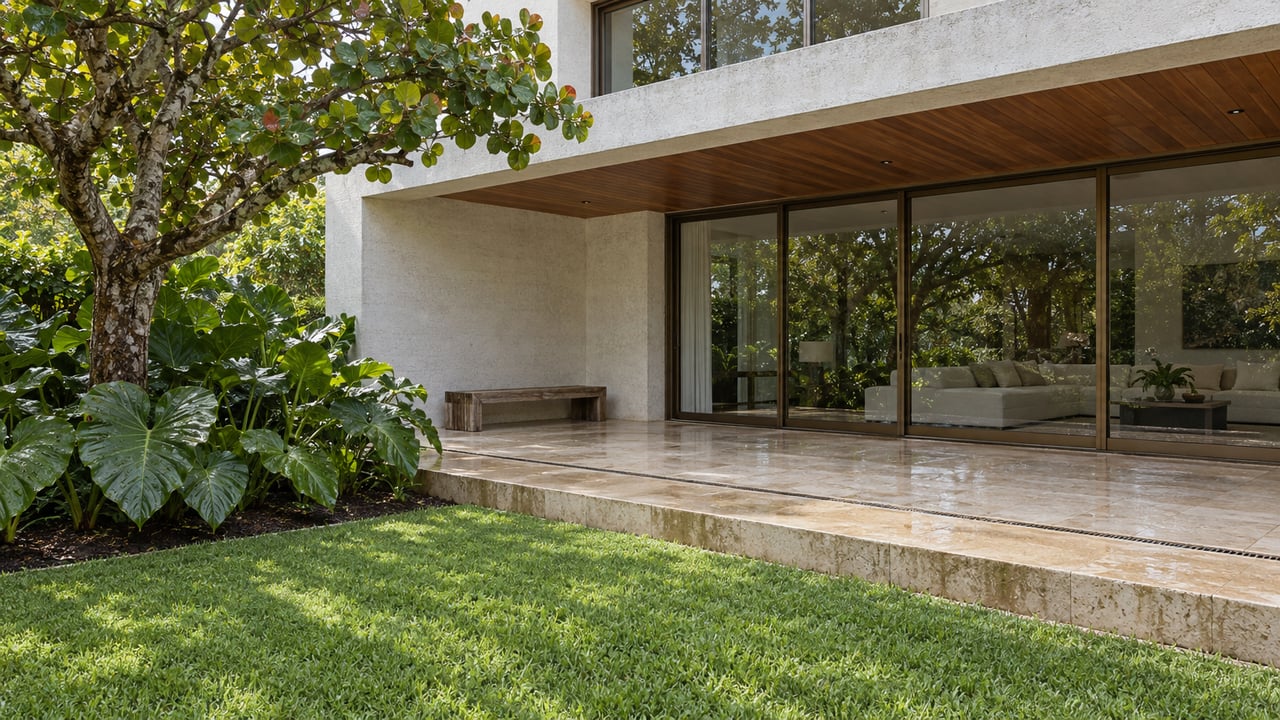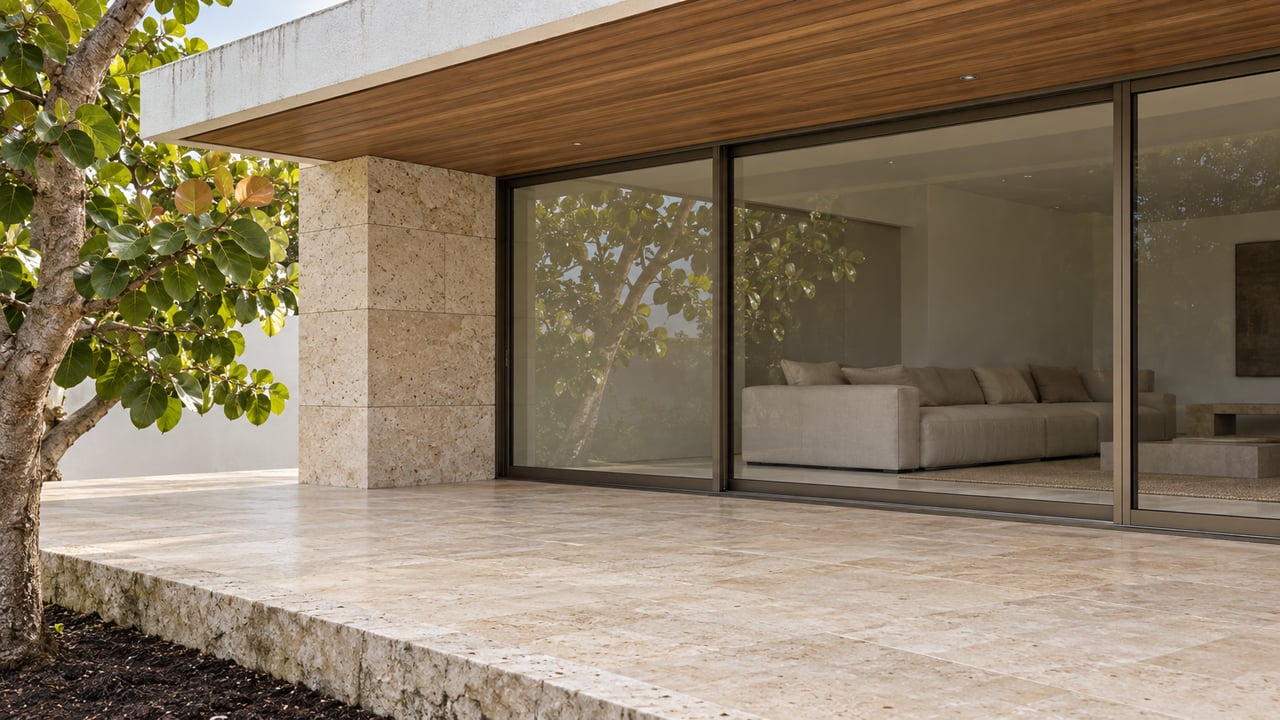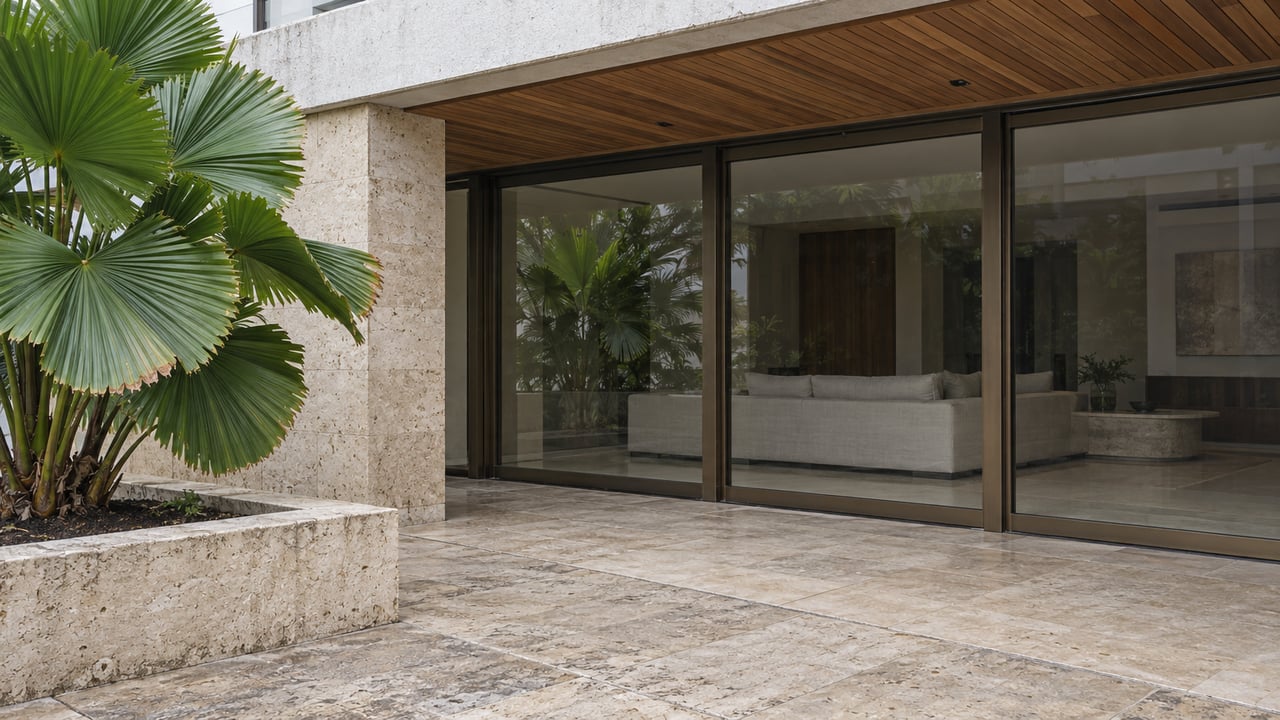
The two-bedroom residences at The Legacy sit on floors two through six. Each has 1,467 square feet, two and a half baths, a private balcony and two parking spaces, one of them with an electric vehicle charger already installed. Prices start at $1.2 million. The building is planned for Luis Vigoreaux Avenue, between Garden Hills and San Patricio, and News is my Business reported in September 2026 that the project "received approval from the Departamento de Asuntos del Consumidor."
That last sentence reads like a guarantee, but it isn't one. At these prices, Puerto Rico law gives a developer two different consumer-protection regimes to choose from, and they treat a buyer's deposit very differently. One keeps the money in an escrow account nobody can draw on. The other, once the developer posts a bond, lets the deposit be spent on building the project. Both regimes involve DACO, so DACO's approval doesn't tell you which one applies.
The Threshold Every Unit Clears
In 2025, Puerto Rico passed Ley Núm. 101, Senate Bill 543, the law promoting "Residencias de Alto Impacto Económico." It covers any new home whose first-sale price is above the FHA loan limit for its municipality. For Guaynabo, which HUD places in the San Juan-Bayamón-Caguas metro area, the 2026 one-unit limit is $690,000. That figure comes from HUD's calendar-year 2026 limits file, and it applies to FHA cases assigned on or after January 1, 2026.
Every residence at The Legacy is priced well above that line. The four penthouses on the seventh floor have 2,934 square feet each and start at $2.95 million. The same is true of Haven, a five-home project under construction in San Patricio. Its homes run about 4,553 to 4,744 square feet, start at $2,585,000, and are scheduled for delivery beginning in March 2027. Garden Hills and San Patricio are among the most expensive parts of the metro area, so nearly anything new built there will land in Ley 101 territory.
The law's statement of purpose explains the reasoning. It says Ley 130 of 1967 was written to protect homebuyers and encourage low-cost housing, and that this older, rigid framework now gets in the way of high-end residential investment as demand grows from high-income local and foreign buyers.
The Regime a Buyer Assumes
Most buyers who have heard of DACO's construction rules picture the older system. Under Ley 130, DACO's Construction Officer licenses developers, reviews the forms of option and sale contracts, and hears complaints. The law covers large-scale and multifamily projects, which expressly includes any project with more than 20 houses or apartments. It treats collecting reservation money before preliminary plans are approved as an undesirable practice, with one exception: market-testing deposits of $25 or less.
The deposit rules are what most buyers have in mind. Advances paid under an option, a promise to sell or a sale contract go into a bank in Puerto Rico, separate from the developer's operating funds. The implementing regulation, Reglamento 2268, requires that deposit within 10 business days. The funds can't be drawn on. They stay put until they are applied to the price at closing or returned to the buyer. The only copy of that regulation located during research was an archived government file with no revision date, so its detailed deadlines should be treated as the version on record, not as confirmed current text.
The Regime the Law Now Allows
Ley 101 lets a developer of qualifying units leave all of that behind. The developer notifies DACO within 30 days of filing its construction-permit application and attaches its application for a special "Urbanizador de Alto Impacto Económico" license. From then on, the units are governed mainly by the contract the parties sign. Disputes go to the Puerto Rico courts or to whatever arbitration or mediation the contract specifies, except for matters DACO keeps under the new law.
The timing explains why a brochure can't settle the question. The election happens at the permit stage, long before any marketing goes out. By the time a buyer is looking at renderings, the regime has already been chosen.
Deposits still go into a segregated account at a bank in Puerto Rico within 10 business days, and a special deposit-account agreement with the bank must be signed before any reservation or purchase contract. Article 7(e) then adds an exception. Once the developer posts a bond with DACO, in an amount DACO sets for that project, it may use buyer deposits "únicamente para gastos relacionados al desarrollo del Proyecto." The statute guarantees a refund only when a court or DACO finds that the developer engaged in undesirable practices or fraud, and it does so regardless of what the contract says. Every other refund right depends on the contract.
| Question | Ley 130 and Reglamento 2268 | Ley 101-2025, if elected |
|---|---|---|
| Where the deposit goes | Separate account at a Puerto Rico bank, within 10 business days | Separate account at a Puerto Rico bank, within 10 business days |
| Can it be spent before closing? | No. The account can't be drawn on | Yes, for project development costs, once a DACO-set bond is posted |
| Seller's retention if the buyer defaults | Capped at 2% of price on a purchase contract, $50 on an option | Set by the contract |
| Buyer exits listed by law | Material design changes, seller nonperformance, mortgage denial, more than 18 months without a deed or keys | Set by the contract, plus refund on a finding of undesirable practice or fraud |
| Where disputes go | DACO | Courts or contractual arbitration and mediation, except matters DACO retains |
Neither the September coverage in El Nuevo Día nor the News is my Business report says which regime The Legacy is under. The law told the agencies to issue any rules needed to carry it out within 60 days of its August 1, 2025 approval. We couldn't confirm that any such DACO rule has been issued. The LexJuris copy of the law also notes that it reproduces the original text and doesn't include later amendments. So the public record doesn't answer the question for any specific project. The project's own documents do.
What Stays Constant Under Both
Some protections apply under either regime. Ley 101 keeps the requirement for a construction-defect bond or insurance of up to 10% of a unit's sale price. Under Ley 130, that security stays in place for at least two years after the final deed. Reglamento 2268 sets a 2% baseline at closing and lets DACO raise it to as much as 10%.
The Civil Code applies no matter which regime a developer picks. Article 1375(i) of the 2020 Civil Code makes the contractor, and the promoter alongside it, guarantee the structure against ruin for 10 years from delivery. The architect is responsible when the ruin comes from soil conditions or design. That guarantee covers structural soundness. It isn't a 10-year warranty on finishes. Ordinary defect claims under Ley 130 generally expire two years after the deed, and the regulation sets shorter notice windows for some items, such as 30 days for closet and electrical defects.
Pricing the Premium Against What Already Stands
The deposit question matters more once you see how far The Legacy's prices sit above the existing market. At $1.2 million for 1,467 square feet, the two-bedrooms start at about $818 per square foot, and the penthouses at about $1,005. As of early October 2026, asking prices in Guaynabo's existing buildings and streets look like this:
- Garden Hills Plaza I: about $267 per square foot
- An El Laurel penthouse listed as ready for renovation: about $282
- Casa Magna: about $379
- Plaza del Prado: about $433
- Garden Hills single-family houses: roughly $484 to $498
These are asking prices, not closed sales. They still show a new two-bedroom costing roughly double the most expensive existing condo on the list. New homes in the zone, like Haven's, come in somewhere in the mid-$500s per square foot.
The premium pays for things the older buildings can only add through renovation or special assessments. The specifications include floor-to-ceiling impact windows and sliding doors, Molteni & C cabinetry, separate mechanical rooms for the air-conditioning equipment, a backup generator and cistern, 24-hour security, concierge service and a Technogym fitness room. The gap shows up statewide as well. Estudios Técnicos data reported in May 2026 put Puerto Rico's average new-home price for 2025 at $421,191, compared with $223,155 for an existing home.
The supply gap explains why buyers accept the premium. RioBlanco says it is the first new construction in the area in more than 25 years. Co-founder Gabriel Jiménez described families who "querían permanecer en la comunidad donde han vivido o crecido" but had to look elsewhere to find a newly built home. A buyer who pays the premium to stay in Garden Hills is also committing the deposit before the building exists, and the rules for that deposit depend on a choice the developer made at the permit stage.
The Paper Trail That Answers It
Four documents, read together, show which regime a project is under:
- The license type. A developer that stays under Ley 130 holds that law's urbanizador license. A developer using Ley 101 needs the special Urbanizador de Alto Impacto Económico license that law creates.
- The Article 3 election notice, if the developer filed one with DACO after applying for the construction permit.
- The deposit-account agreement with the bank. Under Ley 101, this agreement has to be signed before any reservation contract. It shows whether a bond has been posted and whether deposits can be drawn.
- The approved contract form. Under Ley 130, DACO reviews contract formats within 60 days. Under Ley 101, the units are governed by the contract the parties sign, so the contract sets out the buyer's exit rights.
Frequently Asked Questions
Does Ley 101 apply to every project priced above $690,000 in Guaynabo? Price makes a project eligible. It doesn't make the switch automatic. A developer who never files the election stays under Ley 130, Ley 10-1994 and their regulations.
Does Ley 101 reach projects that were already underway in 2025? It applies to qualifying homes whose construction hadn't begun when the law was enacted, and to units in projects already underway that weren't yet under an option or sale contract.
Does the 2026 condominium disclosure law cover a pre-construction purchase? Ley 13-2026 requires condominium administrations to provide the building's regulations to brokers or prospective buyers. Research couldn't confirm whether it covers an initial sale before an administration exists. It doesn't replace the escrow and licensing rules described above.
When a deposit is going into a building that hasn't been built yet, the documents above matter as much as the floor plan. Corcoran Puerto Rico works with buyers to read license filings, deposit-account agreements and contract forms on new Guaynabo developments before a reservation is signed. Contact Us to review a project's paperwork with our team.
This article is general information, not legal, tax or financial advice. Consult a qualified professional about your situation.