A buyer touring the northwest coast this summer put it plainly during a walk along Playa Montones: the waves looked the same as the ones twenty minutes south in Rincón, the sand was just as fine, and the sunset hit the water at the same angle. Yet the comparable lot in Rincón was asking nearly double. The instinct is to blame the beach itself, as if Rincón's water is somehow better. It isn't. The gap has almost nothing to do with the coastline and almost everything to do with what each town has built around it.
This matters for anyone comparing the two towns on paper before ever driving Route 4466. The numbers you find online will contradict each other, sometimes by a factor of four, and the explanation for that contradiction is also the explanation for why Rincón trades at a premium. Once you see the mechanism, you stop asking "why is Isabela cheaper" and start asking a more useful question: cheaper compared to which Isabela.
The Airport Argument Doesn't Hold Up
The first theory buyers reach for is proximity to Rafael Hernández Airport, the JetBlue, Frontier, United, and Avelo gateway in Aguadilla that carries the second-highest passenger volume in Puerto Rico and holds the longest runway in the Caribbean. The logic seems sound: closer to the airport should mean a rental premium, since guests want a short drive from baggage claim to the beach chair.
Isabela sits about 10 miles from that airport, close enough that the drive rarely runs past 20 minutes. Rincón's surf breaks sit another 25 to 40 minutes further down the coast, according to current travel guides for the airport corridor. If airport access were driving the price gap, Isabela should command the premium, not Rincón. It doesn't. Whatever is producing the price difference between these two towns, it isn't runway proximity.
One Town, Three Different Price Estimates
Search for "Isabela real estate median price" and you'll pull numbers that don't agree with each other in any useful way. One active-listings aggregator lists a median price around $439,500. A separate flat-fee MLS tracker, updated in late June of this year, put the average sale price for single-family homes over the prior twelve months at $585,000, with a price per square foot around $181. A third source built on older census-style home-value estimates lands far below both.
None of these sources is wrong exactly. They're measuring different slices of a market that doesn't behave like a single market. Isabela's inventory splits into distinct pockets with almost no overlap in buyer profile or pricing logic, and depending on which pocket a given data pull happens to capture more of, the reported price estimate can vary widely.
The High-End Pocket in Isabela
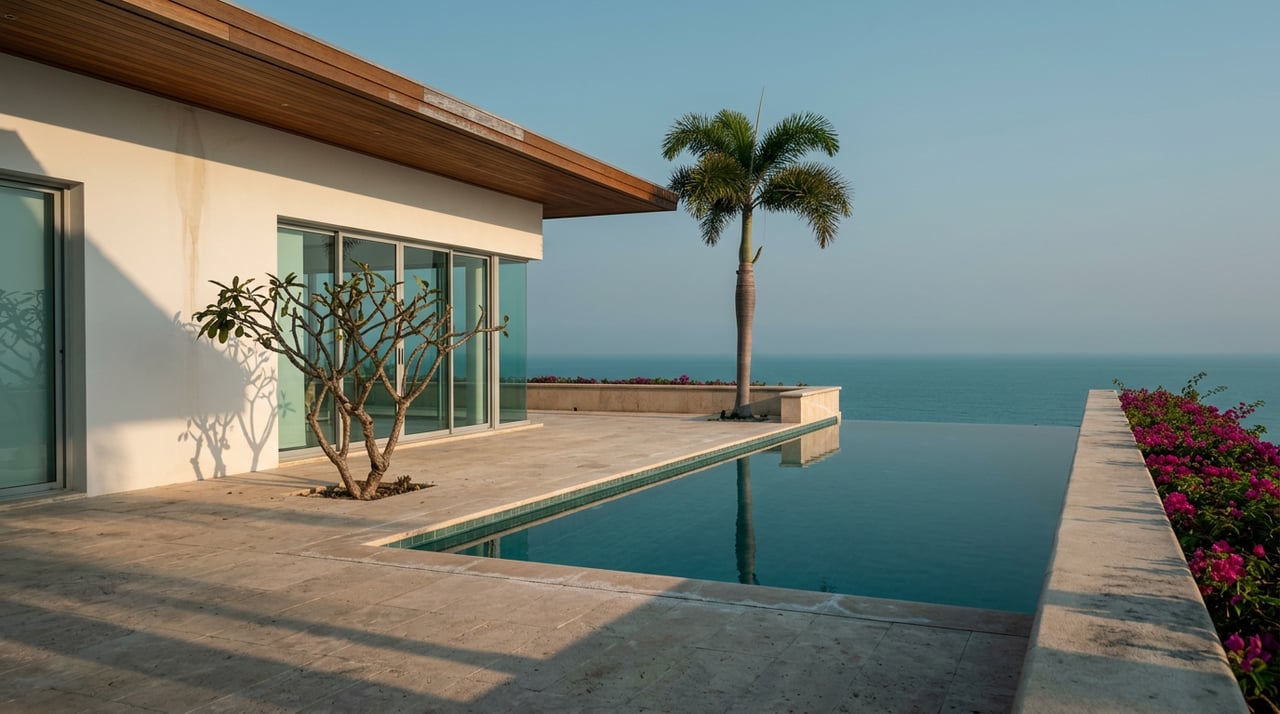
One high-end segment of Isabela's market is represented by Royal Isabela, a private resort community built across roughly 1,800 acres of protected clifftop land on the town's coast. It centers on a championship golf course, private casitas with plunge pools, and homesites priced for buyers who measure a property by seclusion rather than square footage. It is a real, functioning luxury asset, not a marketing fiction, and its homesites share a municipal boundary with ordinary homes.
A dataset that combines multimillion-dollar Royal Isabela lots with modest homes in the Bajuras corridor near Jobos and Middles beaches, or the calmer lagoon-front properties around Montones, can yield different averages depending on the mix it captures that quarter. A buyer shopping for a standard three-bedroom home in Isabela is not competing in the same price band as a buyer shopping for a golf-course homesite, even though both show up under the same town name in a portal search.
Here is roughly how the town's inventory actually splits, based on how local brokers active in the market describe the three pockets:
| Area | Character | Typical buyer |
|---|---|---|
| Bajuras (Jobos, Shacks, Villa Montaña corridor) | Surf-adjacent, mixed condition housing stock | Surf lifestyle buyers, short-term rental investors |
| Montones | Calm lagoon frontage | Buyers prioritizing swimmable water over surf |
| Royal Isabela | Gated clifftop golf resort, custom casitas and homesites | High-net-worth buyers seeking privacy and amenities |
Any single median price collapses these three markets into one number. That number will be wrong for whichever pocket you're actually trying to buy into.
What Sets Rincón Apart from Isabela
If it isn't the airport and it isn't the water, the premium comes down to something less visible on a listing photo: Rincón built a mature, branded short-term rental economy years before Isabela did. Rincón has long carried the informal title of Puerto Rico's surfing capital, and that reputation translates into occupancy patterns, repeat visitor bases, and a rental infrastructure that an investor can underwrite with more confidence. Isabela is genuinely the second most popular surf destination on the island after Rincón, but second place in a two-town race still means a shallower, less proven rental track record for anyone trying to pencil out short-term rental income on a spreadsheet.
That difference shows up in price because buyers are not just purchasing sand and swell. They're purchasing a rental thesis, and lenders, appraisers, and cautious buyers all price in how well-tested that thesis is. Rincón's is tested. Isabela's, outside of Royal Isabela's own guest program, is still being written.
The Setback Rule That Applies to Both Towns Equally
Anyone shopping raw land or a teardown on either coastline should know that Puerto Rico's maritime-terrestrial zone rules apply the same way in Isabela as they do in Rincón. Coastal development is required to cede a 20-meter public use easement inland from where the maritime zone ends, with an additional 30-meter development restriction beyond that, for a combined 50 meters of coastline that is largely off-limits to private construction. The Puerto Rico Coastal Zone Management Program lays this out directly, and waivers exist but are not guaranteed. A cliffside lot that looks buildable end to end on a survey may have a meaningfully smaller usable footprint once this setback is applied. This isn't unique to either town, but it matters more on the west coast, where lot lines are drawn closer to bluffs and dune lines than they are in a place like Condado's urban towers.
What This Actually Means If You're Choosing Between Them
A few practical takeaways follow from the mechanism, not the myth:
- Don't compare an Isabela listing price to a Rincón listing price without asking which pocket of each town you're looking at. A Bajuras home and a Royal Isabela homesite are not the same product.
- If short-term rental income is the primary goal, weight Rincón's longer track record more heavily than a lower Isabela price. The spread often reflects a real difference in rental certainty, not an inefficiency waiting to be captured.
- If you're drawn to Isabela specifically for Royal Isabela's privacy and golf access, evaluate that purchase against other private resort communities on the island, not against Isabela's town-wide median. The comparison that matters is community to community, not town to town.
- On any coastal parcel in either town, get the maritime-terrestrial zone survey done before you fall in love with a buildable footprint that a setback might shrink.
Frequently Asked Questions
Does a lower price in Isabela mean it's a less desirable town than Rincón? No. It means the two towns have different rental track records and different inventory mixes, not different water quality or lifestyle appeal. Isabela is still the region's number two surf destination for a reason.
Is Royal Isabela's pricing representative of the town overall? No. Royal Isabela is a private resort community with its own pricing logic built around seclusion, golf, and clifftop acreage. Using its sale prices to estimate what an ordinary Isabela home costs will mislead you in either direction.
Which town has easier airport access? Isabela does. It sits roughly 10 miles from Rafael Hernández Airport, while Rincón's beaches typically run another 25 to 40 minutes beyond that. Airport proximity is not what's driving the price difference between the two towns.
Comparing two coastal towns on price alone will always produce a confusing picture, because the number on a portal rarely tells you which market inside that town it's actually describing. If you're weighing Isabela against Rincón, or trying to figure out which Isabela pocket fits what you're actually trying to buy, Corcoran Puerto Rico can walk the comparison with you property by property, not town by town.
This article is general information, not legal, tax or financial advice. Consult a qualified professional about your situation.